
How Target Golf Scoring Works at the Range
| by Viviana
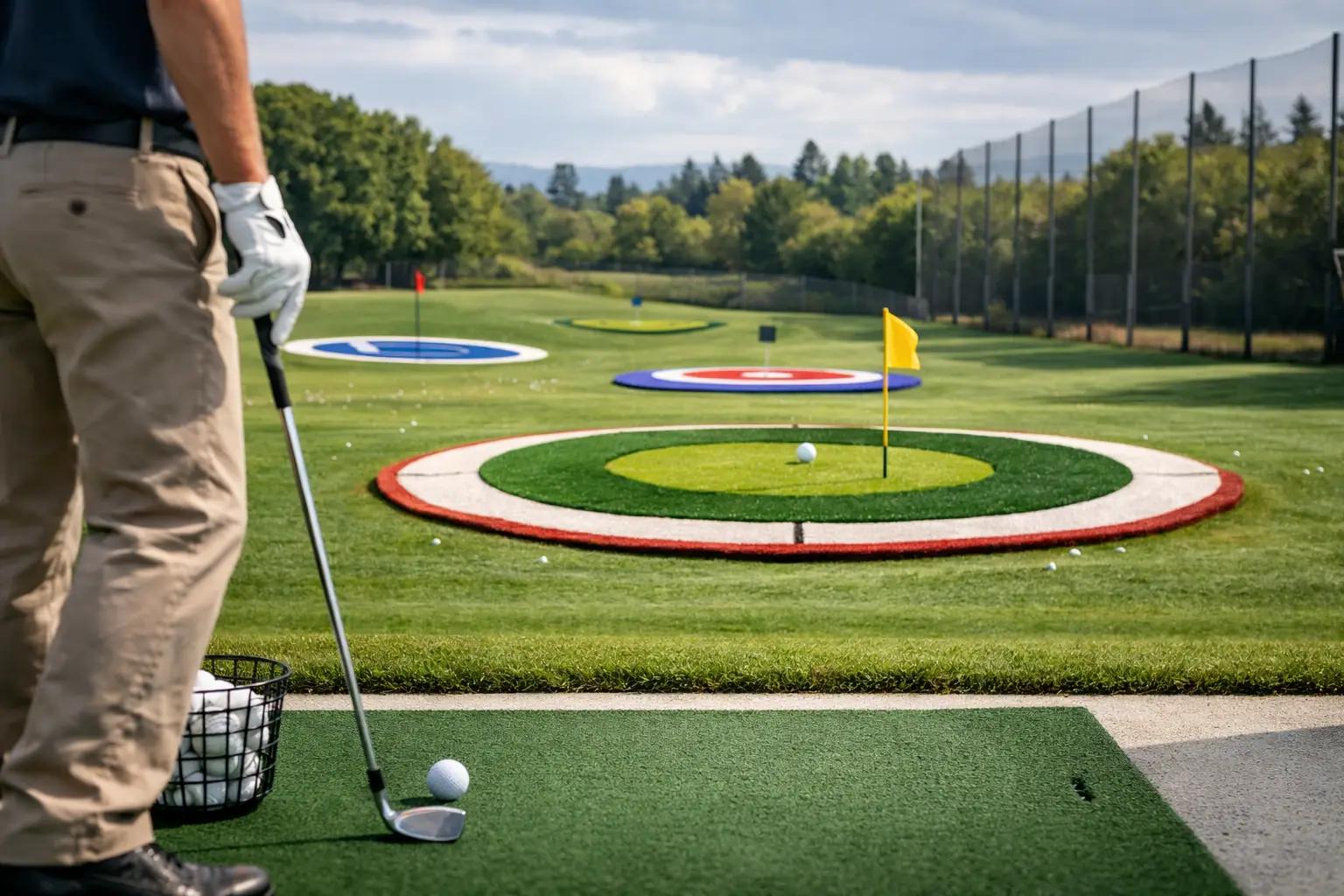
The ball leaves the mat, cuts through the tropical night, and lands inside a glowing target. A number appears on the screen, your friends react, and suddenly a regular swing feels like the next play in a game. That is the appeal of learning how target golf scoring works: you do not need to be a course golfer to have a reason to take one more shot.
Target golf turns the driving range into a points-based experience. Instead of counting strokes across 18 holes, you aim for marked targets in the field and earn points based on where your ball lands. It is part golf, part friendly competition, and part excuse to celebrate a shot that looked much better than you expected.
How Target Golf Scoring Works
At its core, target golf rewards two things: getting the ball into a target and getting it close to the center. Every venue and game mode can set up its own scoring rules, but the basic idea stays the same. Bigger or farther targets may offer different point values, while the most accurate shots typically earn the most.
The field is divided into targets or scoring zones. When your ball lands, the range technology identifies its landing area and sends the result to the screen at your bay. Your score updates automatically, so there is no searching for balls, estimating yardage, or debating whether a shot counted.
Think of it like darts on a much bigger stage. Hitting the board earns points. Landing near the bullseye earns more. In target golf, the board happens to be spread across an open-air range, and your next throw is a golf swing.
The center is where the points live
Most targets have rings, zones, or a clearly defined center. A ball that reaches the outside of a target will usually score, but a ball closer to the middle is more valuable. This gives every player a choice: take a controlled swing toward a nearby target or chase a farther one for a higher-risk, higher-reward shot.
That choice is what keeps the game interesting for mixed groups. A first-timer can aim for a large, comfortable target and build confidence. A golfer with a dependable swing can go after tighter zones or longer distances. Everyone is playing the same game, but no one has to play it the same way.
Distance can change the value of a shot
A ball does not always need to travel the farthest distance to produce the best score. In many target golf formats, a clean shot into a nearby center can beat a wild drive that sails past a distant target. Accuracy matters.
Some games also assign more value to targets that sit farther from the bay. Others may use rotating bonuses, specific target challenges, or timed rounds that reward quick decision-making. The screen will show the rules before the game begins, so the best strategy depends on the mode you choose.
If you are playing for bragging rights, do not assume the biggest swing wins. The player who can repeat a smooth, accurate shot often becomes the surprise leader.
What the Technology Tracks
The experience feels easy because the technology handles the details behind the scenes. Depending on the venue’s system, specially designed balls, cameras, sensors, or ball-tracking technology recognize each shot and calculate where it finishes.
The display then matches that landing location to a target and scoring zone. It may also show useful shot details such as distance, ball speed, trajectory, or accuracy. For recreational play, you do not need to study every number. Watching your score and seeing where the ball landed is enough to jump in.
There is also a practical benefit: your group can focus on the moment instead of the math. Take a swing, watch the flight, see the points, pass the club. It keeps the pace lively, especially when music is playing, drinks are on the table, and everyone is waiting to see whether the next shot finds the center.
Does a glowing ball score differently?
No. A glowing golf ball changes the atmosphere, not the goal. The same core principles apply: land in the target, get closer to the center, earn more points. Under the lights, though, the shot is easier to follow and far more dramatic.
At a glow-in-the-dark driving range, each flight becomes part of the night. You can see the ball rise against the dark sky, trace its path toward the field, and watch the target area light up around it. That visual energy is especially good for groups because even people who are not swinging can follow the action.
A Simple Example of Target Scoring
Imagine your game has three targets: a large target close to the bay, a medium target in the middle of the field, and a smaller target farther out. The close target might be easier to reach but offer fewer points. The far target could be worth more, particularly near its center.
Your first shot lands in the outer area of the close target. You score, but not a huge number. Your second lands near the center of the middle target, and your score jumps. On the third, you swing too hard, miss the far target, and earn nothing for that shot.
That sequence explains the rhythm of target golf. You are not trying to hit every ball as hard as possible. You are reading the targets, choosing a shot, and deciding when it is worth taking a bigger risk.
The exact points in this example are not universal. They can change by game, technology provider, event setup, and venue. Always use the on-screen rules as the final word for your round.
The Best Strategy for Beginners
The fastest way to enjoy target golf is to start with a comfortable target. Pick a club that helps you make solid contact, take a relaxed swing, and aim for the center of a large or medium zone. Trying to crush the ball on your first shot is fun, but it is not always the easiest way to score.
Keep your eyes on the target instead of watching your club. A simple routine helps: choose where you want the ball to land, settle your feet, make one easy practice swing, then send it. When you hit a target, notice what that swing felt like and repeat it.
If your group is competitive, use the scoreboard to create a few easy challenges. See who can hit any target first, who can score on three swings in a row, or who can make the biggest comeback in the final round. These mini contests keep the energy high without requiring anybody to know golf etiquette or own golf shoes.
Why Target Golf Works for a Night Out
Traditional golf can be rewarding, but it asks for time, patience, and a little preparation. Target golf makes the first few minutes more welcoming. You step into your bay, choose a game, and start swinging. No long walk between holes. No pressure to keep up with experienced players. No need to turn the evening into a serious lesson.
It also gives the whole group something to do together. Couples can play side by side. Friends can trade playful trash talk between shots. Families can cheer for a first target hit. Non-golfers have a clear reason to join because the goal is visible, the scoring is instant, and every swing has a chance to create a highlight.
That is why target games fit an after-dark setting so naturally. At GolfNshots Punta Cana, the glowing range, open-air bays, music, and social atmosphere make the score part of a bigger night – not the only reason to be there.
Play the Score, Enjoy the Shot
A perfect score is great. A ball that glows through the Punta Cana night, lands near the target, and gets your whole table cheering can be even better. Start with the targets you can reach, trust a smooth swing, and save one bold shot for the moment everyone is watching. Your scoreboard may remember the points, but your group will remember the feeling.